 Deep Groove Ball Bearings & Motor Bearings Manufacturer | NKMB

When a bearing fails prematurely, people often suspect poor material quality or insufficient lubrication. However, one important factor is frequently overlooked—bearing clearance.
Bearing clearance directly influences operating temperature, rotational speed, vibration, noise and overall service life. Selecting the wrong clearance can reduce bearing performance even if the bearing itself is manufactured to a high standard.
Understanding clearance is therefore an essential step in bearing selection.
What Is Bearing Clearance?
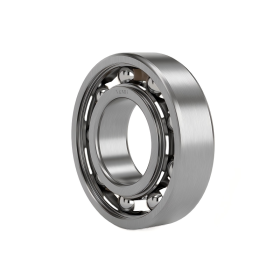
Bearing clearance refers to the internal space between the rolling elements and the raceways before the bearing is installed.
There are two common types:
Radial Clearance
The amount the inner ring can move in a radial direction.
Axial Clearance
The amount the inner ring can move along the shaft axis.
Most deep groove ball bearings are selected according to radial clearance because it has the greatest influence on operating performance.
Common Bearing Clearance Classes
Manufacturers usually classify clearance using standard designations.
C2
Smaller than normal clearance.
Suitable for applications requiring high running accuracy and minimal shaft movement.
Typical examples:
- Measuring equipment
- Precision instruments
- Laboratory devices
CN (Normal Clearance)
CN, sometimes marked as “Normal”, is the most commonly used clearance class.
It is suitable for most industrial machinery operating under normal loads and temperatures.
Applications include:
- Electric motors
- Pumps
- Fans
- Gearboxes
C3
C3 provides greater internal clearance than CN.
As operating temperature increases, bearing components expand. The additional clearance helps prevent excessive preload during operation.
Typical applications include:
- High-speed motors
- Continuous-duty machinery
- Industrial compressors
- High-temperature equipment
C4
C4 clearance is larger than C3.
It is mainly used where thermal expansion or heavy operating conditions require additional internal space.
Examples include:
- Vibrating equipment
- Heavy industrial machinery
- Special high-temperature systems
Using C4 in ordinary equipment is generally unnecessary and may reduce running accuracy.
Does Larger Clearance Mean Better Performance?
One of the most common misconceptions is that larger clearance automatically increases bearing life.
In reality, excessive clearance may lead to:
- Higher vibration
- Increased operating noise
- Reduced positioning accuracy
- Uneven load distribution
- Shorter fatigue life
Similarly, clearance that is too small can generate excessive heat and increase friction.
The best clearance is the one that matches the application’s operating conditions.
Factors That Influence Clearance Selection
Choosing the correct clearance involves more than reading a catalogue.
Engineers should consider:
Operating Temperature
Higher temperatures cause the shaft and inner ring to expand, reducing internal clearance.
Rotational Speed
High-speed bearings usually require careful clearance selection to minimise heat generation.
Load Conditions
Heavy radial loads often reduce operating clearance during service.
Shaft and Housing Fits
Interference fits can significantly change the actual clearance after installation.
Practical Examples
Example 1: Standard Electric Motor
Recommended clearance:
CN
Reason:
Moderate speed and normal operating temperature.
Example 2: High-Speed Servo Motor
Recommended clearance:
C3
Reason:
Higher rotational speed generates additional heat, reducing internal clearance during operation.
Example 3: Precision Measuring Equipment
Recommended clearance:
C2 or specially selected precision bearings.
Reason:
Lower clearance improves positioning accuracy and reduces vibration.
NKMB Engineering Tip
When customers request C3 clearance simply because they believe it is “better,” our engineers first evaluate the operating conditions.
In many cases, CN clearance provides better performance, lower noise and longer service life.
Selecting clearance based on actual operating requirements is always more effective than choosing the largest available option.
Frequently Asked Questions
What does CN mean?
CN indicates normal internal clearance and is suitable for most general industrial applications.
Is C3 better than CN?
Not necessarily. C3 is recommended for applications with higher operating temperatures or higher rotational speeds. For standard equipment, CN is often the better choice.
Can bearing clearance affect noise?
Yes. Both excessive and insufficient clearance can increase vibration and operating noise.
Does clearance change after installation?
Yes. Shaft fits, housing fits and operating temperature all influence the actual internal clearance once the bearing is installed.
Conclusion
Bearing clearance is one of the most important yet frequently misunderstood factors in bearing selection. Rather than choosing the largest clearance available, engineers should evaluate temperature, speed, load and installation conditions to determine the most suitable option.
At NKMB, every bearing can be supplied with different clearance classes to meet the requirements of electric motors, robotics, automation systems and industrial machinery. Proper clearance selection helps improve reliability, reduce maintenance costs and extend bearing service life.