 Deep Groove Ball Bearings & Motor Bearings Manufacturer | NKMB

Bearings are among the most important components in an electric motor. Although they account for only a small percentage of the motor’s total cost, they have a significant impact on efficiency, operating noise, reliability and service life.
Choosing the wrong bearing can lead to excessive vibration, overheating, premature failure and costly downtime. Selecting the correct bearing, on the other hand, helps improve motor performance while reducing maintenance requirements.
This guide explains the key factors engineers and purchasing professionals should consider when selecting bearings for electric motors.
Why Bearing Selection Matters
Every electric motor operates under unique conditions. A cooling fan motor running at 1,500 RPM has very different requirements from a high-speed servo motor operating above 10,000 RPM.
Simply matching the shaft diameter is not enough. Engineers should evaluate several factors before choosing a bearing.
Important considerations include:
- Rotational speed
- Radial and axial loads
- Operating temperature
- Installation accuracy
- Lubrication method
- Environmental conditions
- Maintenance intervals
A proper bearing selection process improves both machine reliability and energy efficiency.
The Most Common Bearing Type for Electric Motors
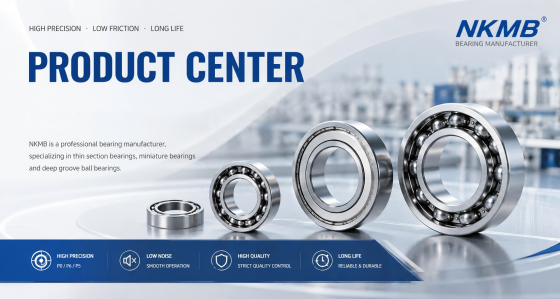
Deep groove ball bearings are the preferred choice for most electric motors because they provide an excellent balance between load capacity, speed capability and low friction.
Their advantages include:
- Smooth rotation
- Low operating noise
- High-speed performance
- Easy installation
- Long service life
- Cost-effective maintenance
For standard industrial motors, deep groove ball bearings remain the most widely used solution.
Common Bearing Sizes Used in Electric Motors
Although motor designs vary, several bearing models are widely used across different industries.
| Bearing Model | Typical Application |
|---|---|
| 6202 | Small electric motors |
| 6203 | Household appliances |
| 6204 | Industrial motors |
| 6205 | Pumps and compressors |
| 6304 | Heavy-duty motors |
| 6305 | High-load industrial equipment |
Selecting the correct size depends on both mechanical design and operating requirements.
ZZ, 2RS or Open Bearings?
One of the most common questions concerns bearing sealing options.
Open Bearings
Suitable for oil-lubricated systems where regular maintenance is available.
ZZ Bearings
Metal shields protect the bearing from dust while maintaining low friction and high rotational speed.
Most indoor industrial motors use ZZ bearings.
2RS Bearings
Rubber seals provide better protection against moisture and contamination.
They are recommended for motors operating in dusty or humid environments.
Should You Choose CN or C3 Clearance?
Internal clearance plays an important role in motor performance.
CN Clearance
Recommended for standard operating conditions with moderate temperatures.
C3 Clearance
Provides additional internal clearance to compensate for thermal expansion during operation.
High-speed motors, inverter-driven motors and continuously operating equipment often benefit from C3 bearings.
Choosing a larger clearance without considering the application may increase vibration and reduce accuracy.
Material Selection
Bearing material directly affects durability and fatigue resistance.
Most industrial electric motors use bearings manufactured from high-carbon chromium steel due to its:
- High hardness
- Excellent wear resistance
- Long fatigue life
- Stable dimensional accuracy
For applications exposed to moisture or chemicals, stainless steel bearings may be a better choice.
Lubrication Makes a Difference
Even the highest-quality bearing will fail prematurely without proper lubrication.
When selecting grease, engineers should consider:
- Operating speed
- Ambient temperature
- Load conditions
- Relubrication interval
- Environmental contamination
Using excessive grease can be just as harmful as using too little.
Common Mistakes When Selecting Motor Bearings
Many bearing failures result from incorrect selection rather than manufacturing defects.
Typical mistakes include:
- Choosing bearings based only on dimensions
- Ignoring operating temperature
- Selecting the wrong seal type
- Using unsuitable internal clearance
- Overlooking lubrication requirements
- Installing bearings with improper tools
Avoiding these mistakes can significantly extend bearing service life.
NKMB Engineering Tip
When selecting bearings for electric motors, consider the complete operating environment instead of focusing only on the catalogue specifications.
For example:
- High-speed indoor motors often perform best with ZZ bearings and C3 clearance.
- Motors exposed to dust or moisture generally benefit from 2RS sealed bearings.
- Precision servo motors may require higher precision grades to reduce vibration and improve positioning accuracy.
Working with the right bearing configuration can improve both motor efficiency and long-term reliability.
Frequently Asked Questions
Which bearing is most commonly used in electric motors?
Deep groove ball bearings are the most common choice because they combine high speed capability, low friction and reliable performance.
Should I use ZZ or 2RS bearings?
ZZ bearings are generally preferred for clean indoor environments, while 2RS bearings provide better protection in dusty or humid conditions.
Is C3 clearance always better?
No. C3 is recommended for higher operating temperatures or high-speed applications. For many standard motors, CN clearance remains the best option.
How often should motor bearings be lubricated?
The lubrication interval depends on operating speed, load, temperature and the type of grease used. Always follow the equipment manufacturer’s maintenance recommendations.
Conclusion
Selecting the right bearing for an electric motor requires more than choosing the correct dimensions. Speed, load, clearance, sealing, lubrication and operating conditions all influence bearing performance and service life.
By understanding these factors, engineers and maintenance professionals can reduce downtime, improve energy efficiency and extend equipment life.
NKMB manufactures high-quality deep groove ball bearings for electric motors, automation equipment, pumps and industrial machinery, providing reliable solutions for OEM manufacturers and distributors worldwide.