 Deep Groove Ball Bearings & Motor Bearings Manufacturer | NKMB

When purchasing a deep groove ball bearing, engineers often focus on dimensions, load ratings and precision grades. However, one small detail can have a significant impact on bearing performance—the sealing structure.
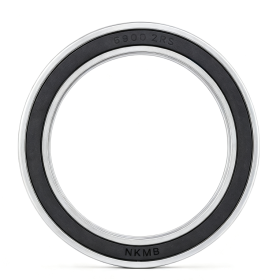
The two most common options are ZZ (metal shield) and 2RS (rubber seal).
Although they may look similar from the outside, they are designed for completely different working environments.
Choosing the wrong shield type may reduce bearing life, increase maintenance costs or even lead to premature machine failure.
This guide explains the practical differences between ZZ and 2RS bearings so that you can make the right decision for your application.
What Is a ZZ Bearing?
A ZZ bearing is equipped with two non-contact metal shields.
These shields are designed primarily to prevent large particles such as dust, metal chips and debris from entering the bearing.
Because the shield does not contact the inner ring, rotational resistance remains very low.
Advantages
- Excellent high-speed performance
- Lower friction
- Reduced operating temperature
- Lower energy consumption
- Longer grease stability at high speed
Typical Applications
- Electric motors
- Cooling fans
- Precision instruments
- Machine tools
- Office automation equipment
What Is a 2RS Bearing?
A 2RS bearing uses synthetic rubber seals on both sides.
Unlike metal shields, rubber seals make light contact with the inner ring, creating a much tighter barrier against contamination.
Although this increases friction slightly, it provides significantly better sealing.
Advantages
- Superior dust protection
- Excellent moisture resistance
- Better grease retention
- Longer service life in contaminated environments
Typical Applications
- Agricultural machinery
- Construction equipment
- Food processing machinery
- Outdoor conveyors
- Garden equipment
Practical Comparison
The best choice depends on where the bearing will be used—not which version is “better.”
| Feature | ZZ Bearing | 2RS Bearing |
|---|---|---|
| Maximum Speed | ★★★★★ | ★★★★☆ |
| Dust Protection | ★★★☆☆ | ★★★★★ |
| Water Resistance | ★★☆☆☆ | ★★★★★ |
| Friction | Very Low | Low |
| Noise | Very Low | Low |
| Grease Retention | Good | Excellent |
When Should You Choose a ZZ Bearing?
A ZZ bearing is usually the better option if:
- The machine operates indoors.
- High rotational speed is required.
- The working environment is relatively clean.
- Low torque is important.
A good example is a high-speed electric motor operating in a factory with clean air.
When Should You Choose a 2RS Bearing?
A 2RS bearing is recommended when:
- Dust is unavoidable.
- Water or humidity is present.
- The bearing is difficult to replace.
- Long maintenance intervals are required.
Examples include agricultural equipment, washing machines and conveyor systems operating outdoors.
Common Misunderstanding
Many buyers believe that 2RS bearings are always better because they offer stronger sealing.
In reality, this is not true.
For high-speed equipment, the additional friction created by rubber seals may increase operating temperature and reduce efficiency.
Likewise, using a ZZ bearing in a dusty environment can shorten bearing life because contaminants can gradually enter through the shield gap.
The correct choice depends on operating conditions rather than preference.
NKMB Engineering Advice
At NKMB, we recommend evaluating four factors before selecting a bearing shield:
- Operating speed
- Working environment
- Lubrication requirements
- Maintenance schedule
If your application demands maximum speed with minimal resistance, choose a ZZ bearing.
If protection against dust, moisture and contamination is the priority, a 2RS bearing will usually provide better long-term reliability.
Frequently Asked Questions
Can a ZZ bearing be converted into a 2RS bearing?
No. The shield design is determined during manufacturing.
Which bearing lasts longer?
Neither type is universally longer-lasting. Service life depends on whether the bearing is matched correctly to the operating environment.
Which bearing is used in electric motors?
Most standard electric motors use ZZ bearings because of their low friction and high-speed capability.
Which bearing is recommended for agricultural machinery?
2RS bearings are generally preferred because they provide better protection against dust, mud and moisture.
Conclusion
Both ZZ and 2RS bearings have clear advantages. The right choice depends on your operating conditions, maintenance strategy and performance requirements.
Understanding the difference between these two sealing designs helps improve equipment reliability, reduce downtime and extend bearing service life.
If you are unsure which bearing is suitable for your project, the NKMB engineering team can provide technical recommendations and customized bearing solutions.